 Search
GRIs News
| KRICT Discovers Novel SRV2 Envelope Protein for Efficient CAR Immune Cell Production | |
| Date | |
|---|---|
| GRI | Korea Research Institute of Chemical Technology (KRICT) |
|
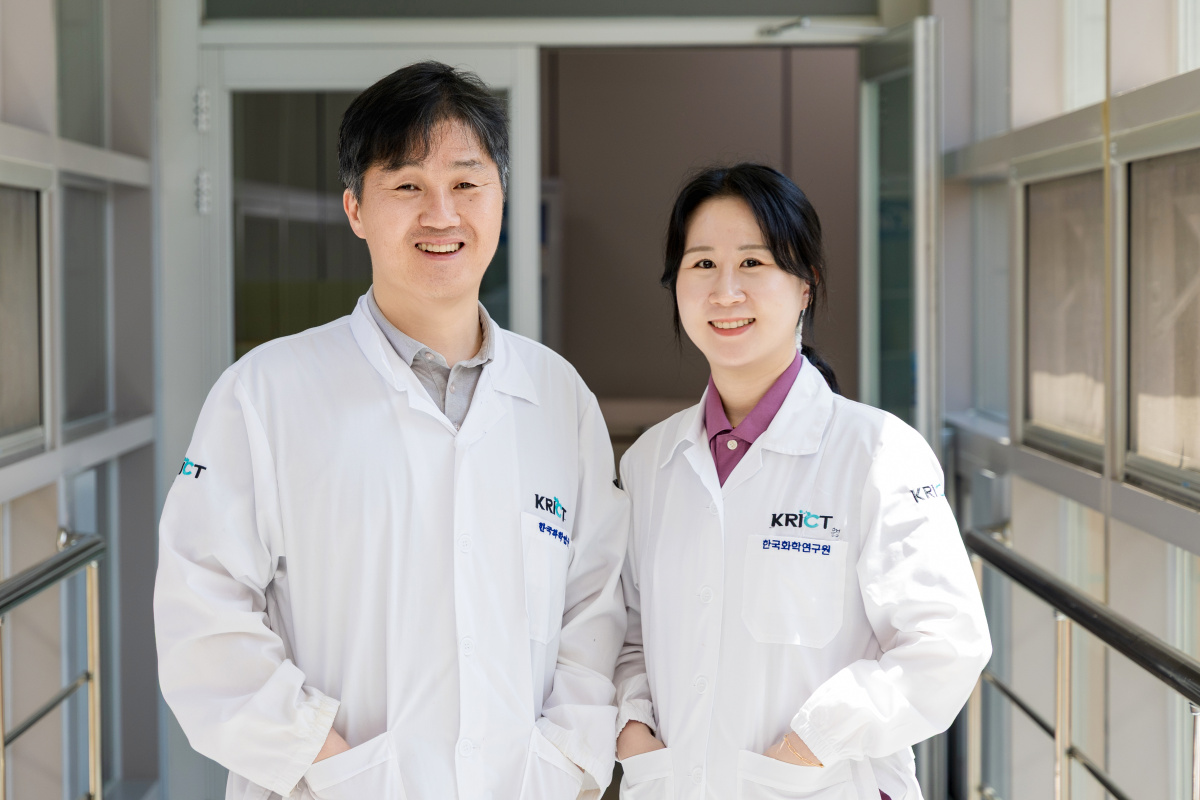
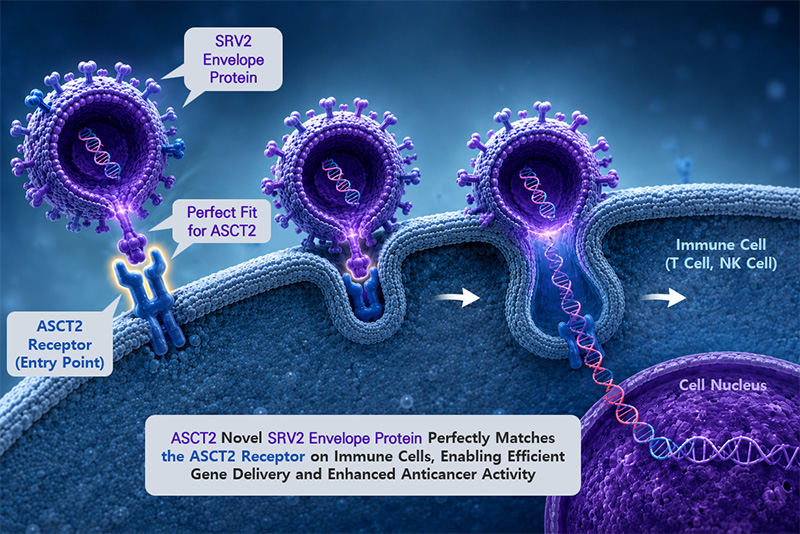
- Researchers identify a novel SRV2 envelope protein that serves as a key to unlock immune cells, enabling more efficient delivery of anticancer genes and improving the production and therapeutic performance of CAR immune cells. A Korean research team has developed a new viral vector technology that significantly improves the production efficiency of next-generation cell and gene therapies known as CAR immune cell therapies, which are designed to recognize and destroy cancer cells. Dr. Chi Hoon Park and his research team at the Korea Research Institute of Chemical Technology (KRICT) discovered a novel envelope protein derived from Simian Retrovirus Type 2 (SRV2). The newly identified SRV2 envelope protein demonstrated superior performance compared with the widely used RD114 envelope protein derived from feline endogenous retrovirus, highlighting its potential for future large-scale manufacturing of CAR immune cell therapies. CAR immune cell therapies are next-generation cell and gene therapies produced by genetically engineering a patient's immune cells, such as T cells or natural killer (NK) cells, to recognize and attack cancer cells more effectively. Although these therapies have shown remarkable clinical efficacy, their manufacturing process remains complex and costly. A critical step in manufacturing CAR immune cells is the production of viral vectors that deliver therapeutic genes into immune cells. These viral vectors are engineered to remove disease-causing functions while retaining their ability to transfer genes. Among their components, viral envelope proteins play a particularly important role by recognizing receptors on immune cells and mediating gene delivery. Until now, the envelope protein RD114 has served as the standard pseudotyping envelope for retroviral vectors used in CAR-T and CAR-NK cell manufacturing, while vesicular stomatitis virus glycoprotein (VSV-G) has been widely used in lentiviral vector systems. To identify a more efficient alternative, the research team explored various viral species and focused on the envelope glycoprotein of Simian Retrovirus Type 2 (SRV2). The researchers found that the SRV2 envelope protein possesses a structure highly compatible with the ASCT2 receptor, a neutral amino acid transporter abundantly expressed on the surface of T cells and NK cells. This compatibility enables more efficient gene transduction into immune cells. Experimental results demonstrated that SRV2-pseudotyped retroviral vectors achieved substantially higher viral titers than RD114-based vectors and showed superior gene transduction efficiency in both T cells and NK cells. CAR-T cells generated using SRV2 vectors exhibited approximately 20–25% higher CAR expression than those produced using conventional methods. In animal studies, untreated mice developed tumors within approximately ten days and all died by day 46. Mice treated with conventional RD114-based CAR-T cells showed delayed tumor growth, but only two of four animals remained tumor-free throughout the study. In contrast, among mice treated with SRV2-based CAR-T cells, only one of four animals developed tumors, while the remaining three mice remained tumor-free for the entire experimental period, demonstrating superior antitumor activity. The research team has completed optimization of the SRV2-based vector manufacturing process, including plasmid ratios and production protocols, and plans to continue follow-up studies toward large-scale production and commercialization. Dr. Chi Hoon Park stated, “This study is significant because we identified a new candidate envelope protein that outperforms RD114, the gene-delivery key that has been widely used worldwide.” KRICT President Seok Min Shin added, “Although CAR therapies offer remarkable anticancer efficacy, their high manufacturing costs remain a major challenge. We hope this new vector platform will contribute to both improved manufacturing yields and enhanced therapeutic outcomes.” |
|
| EurekAlert URL | https://www.eurekalert.org/news-releases/1133613 |
| Newswise URL | https://www.newswise.com/articles/view/850277 |